Sleep is often treated as dead time, a period when the brain shuts down so the body can rest. Sleep research over the last several decades suggests quite a different story. The brain remains highly active during sleep, monitoring the environment, reorganizing memories, and maintaining perceptual systems. Some of the most compelling evidence for this comes from studies that initially sound strange or counterintuitive, but ultimately reveal how fragile and essential sleep really is.
1. Half of your brain stays awake in a new place
When people sleep in an unfamiliar environment, such as a hotel, a new apartment, or a sleep laboratory, they consistently show poorer sleep on the first night. Neuroimaging studies demonstrate that this is not simply discomfort or anxiety. One study by Sasaki et al. (2016) found that during the first night in a new environment, the left hemisphere shows reduced slow-wave activity and increased responsiveness to external sounds. This phenomenon, often discussed by Matthew Walker, is known as the first-night effect and is thought to reflect an evolutionary safety mechanism in which the brain prioritizes vigilance over deep restorative sleep (Walker, 2017). In other words, our brain remains partly awake, just in case we need to spring into action in this new environment.
2. Rats deprived of sleep die faster than rats deprived of food
Some of the earliest and most disturbing sleep research involved total sleep deprivation in animals. Classic studies by Rechtschaffen and colleagues showed that rats prevented from sleeping died within weeks, often sooner than rats deprived of food (Rechtschaffen et al., 1989). The animals developed severe physiological breakdown, including immune failure and metabolic disruption. These findings provided some of the strongest early evidence that sleep is biologically essential rather than a passive luxury.
3. Sleeping brains still respond to your name
Sleep does not render the brain unresponsive to the environment. EEG studies show that meaningful stimuli, such as a person’s own name, elicit stronger brain responses than neutral sounds even during non-REM sleep (Perrin et al., 1999). This suggests that the sleeping brain continues to evaluate relevance and potential importance, rather than simply blocking out all external input.
4. Sleepwalking brains are awake and asleep at the same time
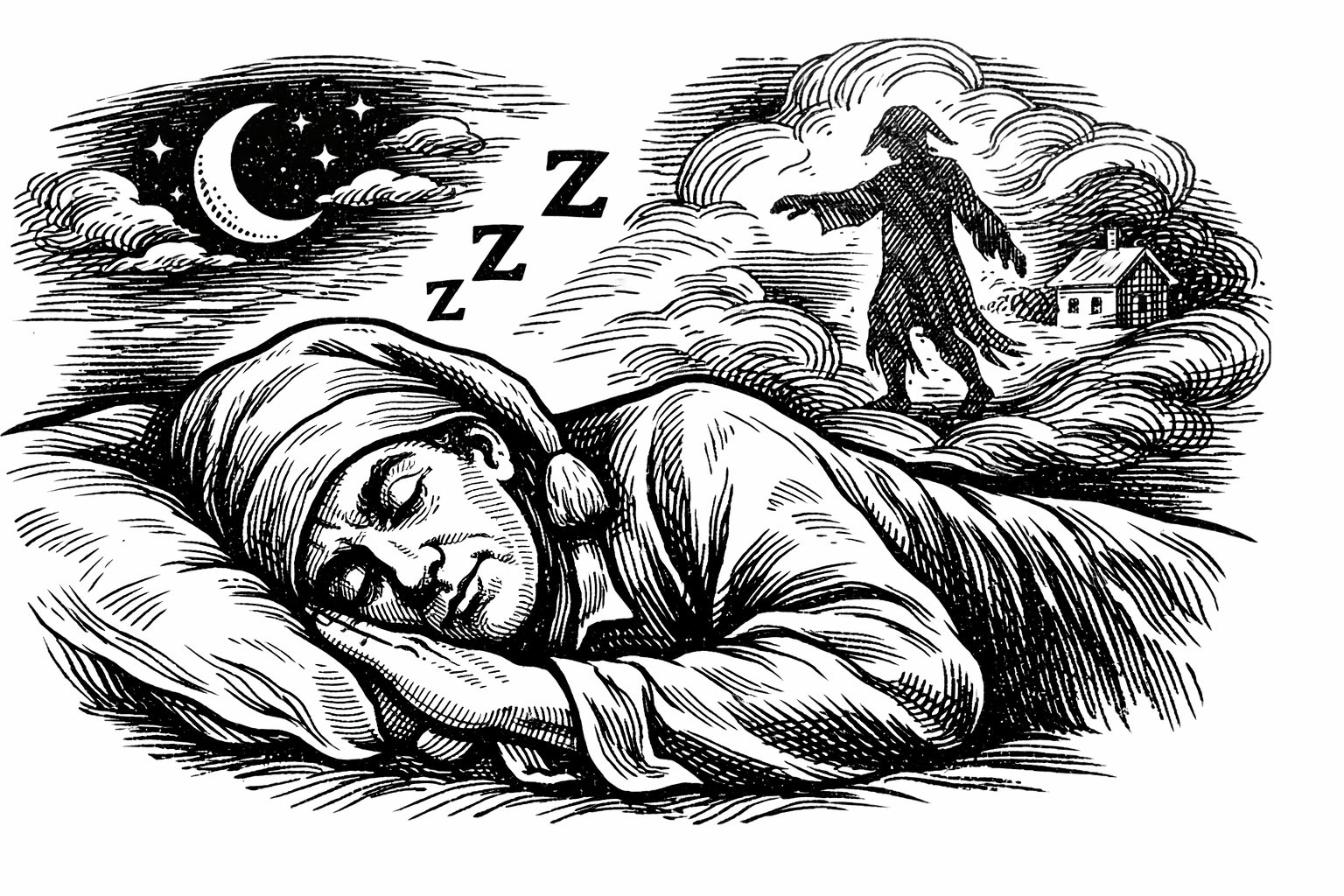
Sleepwalking provides one of the clearest examples of a hybrid brain state. Neuroimaging research has shown that during sleepwalking episodes, motor regions of the brain become active while frontal regions involved in reasoning, self-awareness, and decision making remain asleep (Bassetti et al., 2000). This dissociation explains how individuals can perform complex behaviors such as walking or opening doors without conscious awareness or later memory of the event.
5. Dreaming activates the visual cortex as if you are seeing
Functional imaging studies consistently show that during REM sleep, the visual cortex becomes highly active despite the absence of visual input (Hobson et al., 2000). Building on this research, David Eagleman has proposed that dreams may help preserve visual brain territory by keeping visual circuits active during sleep, preventing other sensory systems from taking over unused neural real estate due to brain plasticity (Eagleman, 2020).
6. Blind people can dream visually depending on when vision was lost
Dream research involving blind individuals offers further insight into how dreams work. Studies show that people who lose their sight after early childhood often continue to experience visual dreams, while those blind from birth do not (Bértolo et al., 2003). This suggests that dreams rely on stored perceptual representations rather than real-time sensory input. Dream imagery appears to be reconstructed from memory rather than generated from scratch.
7. Sleep paralysis inspired demon myths across cultures
Sleep paralysis occurs when waking consciousness returns before REM muscle paralysis has ended. People experiencing sleep paralysis often report intense fear, chest pressure, and a sensed presence. Cross-cultural research has shown that descriptions of these experiences are remarkably consistent across time and place, often interpreted as supernatural attacks such as succubi, incubi, or night hags (Hufford, 1982). Neuroscience explains these experiences as REM dream imagery intruding into waking awareness, producing hallucinations that feel real because the brain is still partially dreaming.
8. The brain continues working on problems during sleep
Research on memory consolidation shows that recently learned information is reactivated during sleep. In some studies, presenting subtle cues related to prior learning during sleep improved later recall or problem solving performance (Rasch et al., 2007). These findings suggest that sleep does not create new knowledge, but reorganizes existing information in ways that support insight after waking. Memory has been discussed a number of times on WTFreud, including in this developmental psychology piece, for those that are interested.
9. Birds can sleep while flying
Some migratory birds engage in unihemispheric sleep during long flights, allowing one hemisphere of the brain to sleep while the other remains awake (Rattenborg et al., 2016). This research has helped scientists understand partial vigilance in sleep and provided a useful comparison for human phenomena such as the first-night effect and light sleep under perceived threat.
10. A disease exists where people completely lose the ability to sleep
The most extreme evidence for the necessity of sleep comes from Fatal Familial Insomnia, a rare genetic disorder caused by a prion (misfolded protein) mutation. As the disease progresses, patients lose the ability to generate deep sleep and eventually lose the ability to sleep at all. This leads to cognitive decline, hallucinations, autonomic failure, and death (Montagna et al., 2003). Fatal Familial Insomnia provides one of the clearest demonstrations that sleep is essential for maintaining brain function and survival, and that the brain and body are capable of incredibly complex outcomes (as is the case with disorders like Capgras Syndrome, as discussed in this article here).
Weird sleep studies matter
These studies are strange because sleep itself is strange. Sleep blurs the boundary between consciousness and unconsciousness, between vigilance and vulnerability, between repair and breakdown. The brain does not turn off at night. It monitors the environment, consolidates memory, simulates perception, and maintains its own structure.
This research reveals what happens when this delicate system is disrupted. Sleep is not downtime. It is the process by which the brain keeps itself coherent, stable, and alive. Sweet dreams!





Leave a Reply
You must be logged in to post a comment.