For a surprisingly long time, scientists believed the adult human brain was essentially finished. Once childhood ended, the brain’s structure was thought to be set, capable of only minor adjustments before an inevitable decline. Learning could still happen, but the underlying machinery was assumed to be rigid. That assumption shaped psychology, medicine, and education for decades, and it turned out to be profoundly mistaken.
Hints that the brain might be more flexible appeared early on. In the late 1800s, William James suggested that habits form physical pathways in the nervous system. He argued that repeated experiences leave lasting marks on the brain, even if no one yet knew how to observe them directly. These ideas were largely philosophical at the time, and without biological evidence, they failed to overturn the dominant belief that brain structure stopped changing after development.
The first serious theoretical challenge arrived in the mid 20th century with Donald Hebb. Hebb proposed that learning occurs when connections between neurons strengthen through repeated co-activation. In simple terms, when two neurons repeatedly fire together, the connection between them becomes more efficient. Today, Hebb’s contribution is often summarized with the notion, “Neurons that fire together, wire together.” This idea offered a biological explanation for learning and memory and suggested that experience could physically alter the brain. Still, it remained mostly theoretical for years.
What finally changed the conversation was technology. As neuroscience gained better tools to study living brains, researchers began to see direct evidence of structural change. One of the most influential figures in this shift was Michael Merzenich, whose work demonstrated that the brain’s sensory maps reorganize themselves when input changes. When areas of the body lost sensation or were trained intensively, the corresponding regions of the brain either shrank, expanded, or were taken over by neighboring areas. The brain was not passively adapting. It was actively reallocating resources.
By the late 20th century, the idea of neuroplasticity was no longer controversial. It was unavoidable! The brain could change its structure in response to learning, injury, and experience well into adulthood. This realization completely reframed how scientists thought about recovery, education, and mental health.
Although a bit dated, I have shown this video about an extreme example of plasticity to my Introductory Psychology students for years:
Contemporary research continues to reveal just how remarkable this flexibility can be. Stroke recovery offers one of the clearest examples. When brain tissue is damaged, lost abilities sometimes return, not because the injured neurons regenerate, but because other brain regions learn to perform the same functions. Modern rehabilitation techniques are designed around this principle, deliberately pushing the brain to form new pathways rather than waiting for damaged areas to recover.
Another discovery that reshaped neuroscience was adult neurogenesis. For most of the 20th century, students were taught that adults could not grow new neurons. Evidence now shows that new neurons can form in the hippocampus, a region central to learning and memory. This finding has implications for aging, depression, exercise, and sleep, all of which influence how flexible and resilient the brain remains over time.
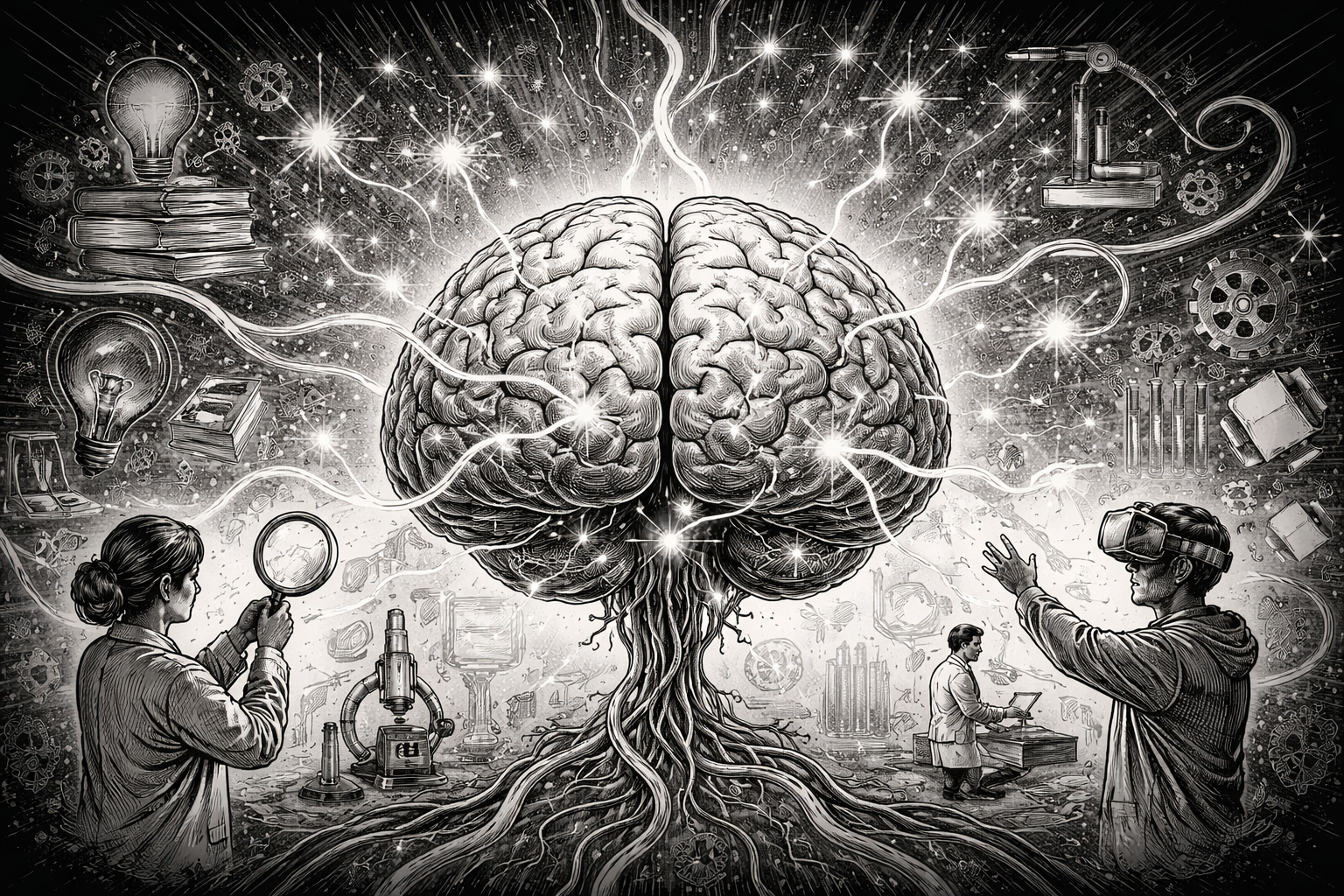
The broader impact of plasticity research extends far beyond neuroscience labs. It challenges the idea that abilities are fixed, that psychological patterns are permanent, or that recovery has a strict expiration date. Experience does not simply pass through the brain. It reshapes the brain that processes it.
At the same time, the history of brain plasticity research offers an important lesson in humility. Many ideas once taught with certainty, including the belief that adult brains could not change or grow new neurons, were later overturned. As research methods improve and new questions are asked, our understanding of the brain will continue to evolve in ways we cannot yet predict. What we know now is powerful, but it is incomplete. The brain remains one of the most complex systems we have ever tried to understand, and its capacity for change reminds us that scientific knowledge is always provisional, shaped by the limits of the tools and perspectives of its time.




Leave a Reply
You must be logged in to post a comment.